REDUCING YOUR RISK OF
TRANSMISSION
There are a number of things that we can do to reduce the
risk of transmission to our partners, and by using these
practices, many people have been successful in NOT spreading
herpes to their partner(s). Some people who have HSV2 have
NEVER spread it to a partner. However, there are no
guarantees. Everyone has a different situation. And your
PARTNER'S health and immune system is also a factor. But if
you use some or all of these practices, your risk of
transmitting the virus to your partner(s) might be much lower.
1) Have your partner(s) tested. Reducing the risk of transmission of
herpes and other STD's requires that both partners KNOW their status
for herpes and other STD's PRIOR to becoming intimately involved.
Unless your partner has taken one of the newer, very reliable type-specific herpes blood tests at least 12-16 weeks AFTER their last
intimate encounter, there is always the chance that they might
have acquired the herpes virus prior to sleeping with you.
This goes for other viruses as well. So if you have intimate
relations prior to your partner being tested, and they later
develop symptoms and test positive for herpes, you will NEVER
KNOW if your partner got herpes from you or if they had it
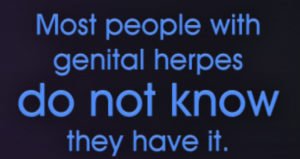
BEFORE you, but just didn't know it. Remember, 25% of US Adults
have genital herpes, but up to 90% of them DON'T KNOW IT.
Asking your partner(s) to get tested prior to your getting
involved may seem awkward, but unless you and your partner
don't care about spreading STD's, it's a very reasonable thing
to ask someone to do. Frankly, now that herpes is so easy to
diagnose via type-specific blood tests, everyone should be
doing this. The medical profession will eventually catch up...
but in the meantime, we need to ask our partners to get tested
for herpes and other STD's as soon as a physical relationship
looks likely. Also, wouldn't it be nice to find out that your
partner is one of the 25% who already has herpes, so you don't have to worry
about giving them an STD that they ALREADY have?
Testing is part of the solution. Let's be pro-active on the
testing front.
For a current list of reliable blood tests for herpes, from the
American Society for Social Heath (ASHA), go to:
http://www.ashastd.org/pdfs/blood_test.pdf
2) Condoms: These will only help prevent transmission if the
area that they cover is the same as the area where you or
your partner has outbreaks or asymptomatic shedding. In many
cases, condoms do not cover the area where the outbreaks or
shedding occurs. Condoms still may be effective as
contraceptives.
3) Suppressive Therapy: In studies, Valtrex (a derivative of
Acyclovir/Zovirax) taken daily was shown to reduce the risk
of transmission to a non-infected partner by 50%. So basically,
if you take Valtrex daily (or it might be Acyclovir or Famvir),
you can potentially reduce your risk of transmission to a
partner by one half! This is great news! However, keep in mind
that the only people who participated in the Valtrex study were
those people who had chronic symptoms. There was no study to
determine how effective suppressive therapy would be on people
who already had few or no symptoms. We can only ASSUME that
suppressive therapy is at least as effective in reducing
asymptomatic shedding in people who have few or no symptoms as
it is for people who have chronic symptoms. To read the FDA Paper
on Genital Herpes, which includes guidelines for prescribing
suppressive therapy does of common antiviral drugs, go to:
http://www.fda.gov/fdac/features/2002/202_herp.html
4) Herbal/natural remedies: In addition to prescription drugs,
there are a number of herbal remedies that claim to have some
positive benefits for people with herpes. Some have proven
benefits, while others are bogus, and still others need more
study. It has not been determined whether or not any herbal or
natural supplements have any effect on reducing the risk of
HSV2 transmission. Maybe yes, maybe no. But it would be nice
to think maybe yes.
5) Self-Monitoring: Some people can *tell* that they might be
having an HSV2 outbreak - because they feel a tingling or
other sensation - even if it never turns into a sore or any
other visible symptom. Many people feel things like this in
advance of a real outbreak. Other people may feel things like
this - but then the outbreak never happens. In any case, if you
abstain from intimate contact - from the moment you start feeling
some tingling or any other unusual sensation - whether or not it
turns into an actual outbreak - then you are likely to
significantly reduce your risk of transmission. There are no
published studies about self-monitoring, so you just need to
go by common sense.
6) Low-stress Lifestyle: Many believe that stress increases
the occurrence of herpes outbreaks. Stress may also decrease
your auto-immune defenses. So if you and your partner both
avoid stress, you should theoretically lower your risk of having
outbreaks and being potentially infectious - as well as lowering
your risk of "catching" this or another virus from other people.
There are so many things that you can do to help lower the
potential risk of transmitting HSV2 to your partner. Depending
on your particular situation, your risk might be higher - or
lower.
****************
Bottom line - is that you CAN significantly reduce your risk
of transmitting HSV2 to your partner, even when you are having
no outbreaks. If you take all of these precautions, you might,
in fact, be a safer partner than someone who has not been tested
recently for STD's and is taking no particular precautions. Just
using a condom, for instance, does not guarantee against the
spread of many STD's, including herpes. Since most people have
not taken an HSV-2 type specific blood test at least 12-16 weeks
after their last sexual partner, they might possibly be carrying and spreading the HSV2 virus without their knowledge, and may
display no particular symptoms.
The only difference between US and THEM (the general population)
is that we KNOW what we have and we can do something about it.
At least 1/4 of THEM are really part of US, but they just don't
know it. Asking our potential partners to get tested may seem
awkward, but just think of the favor you will be doing for
yourself and everyone else - if someone who has it, finally
learns that they have it and can start doing something about it.
For more information, we recommend that you check out our
Herpes Links and Information Page.
Dating With Herpes Home
● Herpes DATING ONLINE ● Herpes
Social Groups ●
Telling SomeonE
● Reducing Your Risk ● Herpes
Blood Tests ●
Herpes Links ● HERPES Q&A
BLOG ● NATIONAL EVENTS ●
Contact Us